The 4 Levels of AI Search Visibility (And Why Most Websites Are Stuck at Level 1)
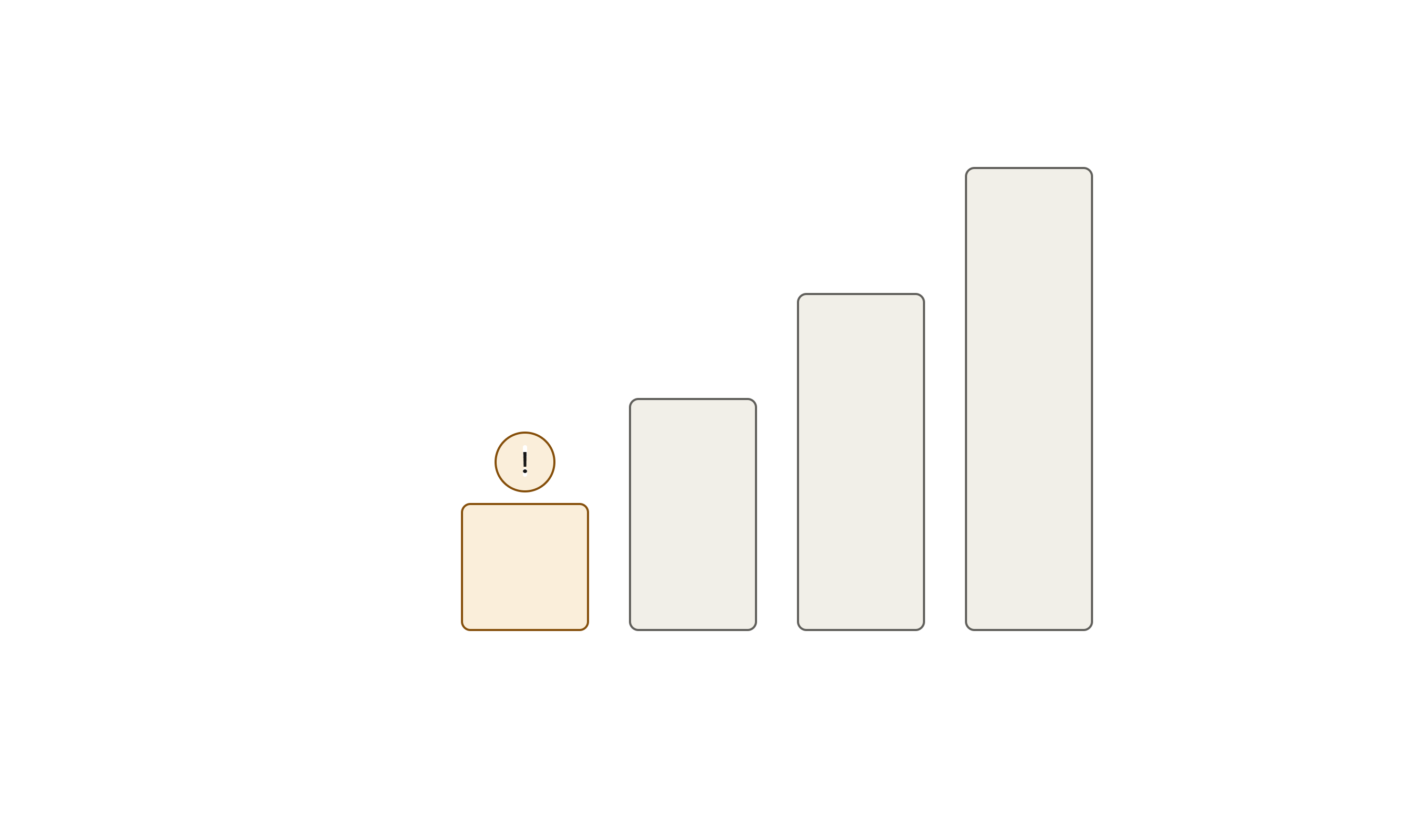
Most conversations about AI search visibility stop at the infrastructure layer — allow the right crawlers in your robots.txt, add schema markup, submit your sitemap. That gets your website noticed by AI engines. It does not get your website cited by them. There is a significant difference between a website that AI can access and a website that AI actively references when answering questions. That gap is where most websites live — and most agencies have no visibility into which level their clients sit at.
Why GEO Infrastructure Is Just the Entry Ticket
GEO infrastructure — the technical foundation that allows AI search engines to access a website — is necessary but not sufficient for AI visibility. It includes: permitting AI crawlers in robots.txt, implementing structured data markup, maintaining a clean sitemap, ensuring fast server response, and keeping the site consistently available. Without this foundation, AI engines like ChatGPT, Perplexity, and Google's AI Overviews cannot access the site at all. That is Level 1. But passing Level 1 does not mean the site will appear in AI-generated answers — it means the site is eligible to be evaluated. The evaluation is where the other three levels come in. Think of GEO infrastructure as a door. Opening the door lets AI engines in. What they find inside determines whether they cite you, ignore you, or recommend you.
The 4 Levels of AI Search Visibility
The four levels of AI search visibility describe how AI engines interact with a website — from basic access through to active recommendation. Each level requires the previous one as a foundation, but each has its own distinct requirements.
Level 1 — Indexed: AI Can Access Your Site
A website is at Level 1 when AI crawlers can reach it, read it, and add it to their training or retrieval pool. The requirements are entirely technical: robots.txt permits the relevant crawlers (GPTBot, ClaudeBot, PerplexityBot, Google-Extended), the site loads without errors, SSL is valid, and the sitemap is accessible. Most websites with basic technical hygiene reach Level 1 without any deliberate effort. Being indexed means the AI knows your website exists. It does not mean the AI understands what your website is about, who it is for, or why it should be cited. Signals that determine Level 1: - robots.txt AI crawler permissions - Site availability and uptime - SSL certificate validity - Sitemap accessibility - Page load speed and server response time
Level 2 — Crawled and Understood: AI Knows What Your Site Is About
A website reaches Level 2 when an AI engine can correctly identify its core entities, topics, and purpose. This is where most websites fail — not because the content is bad, but because it is not structured for machine comprehension. AI engines extract meaning through entity recognition (who or what the page is about), topic classification (what category the content belongs to), and relationship mapping (how this page connects to other known entities and topics). A page that says "we help businesses grow online" teaches an AI nothing. A page that says "Vedrly is a white-label website monitoring platform for web agencies, tracking uptime, performance, security, SEO, and GEO visibility" gives an AI five extractable entities and a clear category. Signals that determine Level 2: - Schema markup accuracy and completeness - Clear entity definitions in the first paragraph of each page - Consistent use of the brand/product name with descriptive context - Topical depth — does the site cover its subject area comprehensively or superficially - Internal linking that connects related topics coherently - Heading structure that reflects actual content hierarchy.
Level 3 — Cited: AI References Your Site in Answers
Level 3 is where AI visibility becomes commercially meaningful. A website is cited when an AI engine actively references it as a source when generating an answer to a relevant query. This is the equivalent of ranking on page one of Google — but for AI-generated responses. Citability — the likelihood of being cited by a large language model — depends on factors that go well beyond technical structure. AI engines cite sources that are factually specific (concrete numbers, named examples, verifiable claims), authoritative on their topic (topical depth, consistent coverage, no contradictions), and externally validated (referenced by other indexed and credible sources). A website that publishes one blog post about a topic is unlikely to be cited. A website that publishes ten structured, specific, internally linked posts on the same topic — and is referenced by other sites — builds the citability signals that move it to Level 3. Signals that determine Level 3: - Factual specificity: concrete data, named examples, specific numbers - Topical authority: depth and consistency of coverage on a narrow subject area - External references: other indexed sites linking to or mentioning the domain - Content freshness: regular updates signal an active, reliable source - EEAT signals: Experience, Expertise, Authoritativeness, Trustworthiness — the same framework Google uses, now applied by LLMs - Direct answer formatting: content that answers specific questions in the first sentence of each section.
Level 4 — Recommended: AI Proactively Suggests Your Site
Level 4 is the highest form of AI search visibility. A website reaches Level 4 when AI engines not only cite it in relevant answers but proactively recommend it as the best resource for a specific query — without being asked about that specific site. This is rare, and it requires sustained performance across all three previous levels plus one additional factor: brand recognition within the AI's training data and retrieval layer. Sites that are consistently cited across multiple AI platforms, referenced frequently by other credible sources, and associated with a clear and narrow area of expertise build the signal density that leads to proactive recommendation. For most businesses, Level 3 is the practical target. Level 4 emerges from sustained Level 3 performance over time — it cannot be engineered directly but it can be built toward deliberately. Signals that determine Level 4: - Consistent Level 3 citation across multiple AI platforms - Brand mentions on high-authority indexed sources - Association with a specific and narrow topic area — not general expertise - Volume of content that answers the specific questions users ask AI - Community and social signals that indicate real-world authority.
What Actually Moves a Website Between Levels
Moving from Level 1 to Level 2 is a technical and structural problem. It requires schema markup, entity clarity, and content architecture. Most agencies can address this in a focused audit. Moving from Level 2 to Level 3 is a content and authority problem. It requires producing specific, factual, topically deep content consistently — and getting other credible sources to reference it. This takes months, not days. Moving from Level 3 to Level 4 is a brand and reputation problem. It cannot be directly engineered. It is the result of sustained Level 3 performance compounding over time. The most important shift in thinking is this: GEO is not a checklist. It is a spectrum. A website can pass every technical GEO requirement and still never be cited by an AI engine, because the content gives the AI nothing worth citing. Technical infrastructure opens the door. Content quality, factual specificity, and external authority determine whether the AI walks through it.
How to Measure Which Level Your Clients Are At
Most agencies have no systematic way to measure AI search visibility for client websites. Traditional SEO tools track Google rankings. They do not track whether a site appears in ChatGPT answers, Perplexity citations, or Google AI Overviews. Measuring Level 1 is straightforward: check robots.txt permissions, verify AI crawler access logs, confirm sitemap availability. Measuring Level 2 requires a structured content audit — schema completeness, entity clarity, heading hierarchy, internal link coherence. Measuring Level 3 and 4 requires active monitoring of AI-generated responses for queries relevant to the client's business. Vedrly tracks GEO visibility signals for every monitored website — measuring the technical and structural factors that determine AI search level, and surfacing them in the white-label report alongside traditional monitoring data. It does not replace manual content auditing for Level 3 signals, but it gives agencies a baseline measurement they can act on and report to clients every month.
Why This Framework Matters for Agencies Right Now
Clients are already asking whether their websites appear in ChatGPT or Perplexity results. Most agencies cannot answer that question with data. The agencies that can — that show up to a client meeting with a report that says "your site is at Level 2, here is what is blocking Level 3, and here is the plan" — are having a conversation that no competitor in their market is having. GEO visibility reporting is where technical SEO was in 2012. The agencies that built technical SEO practices early became the ones clients called when Google algorithm updates hit. The agencies that build GEO visibility practices now will be the ones clients call when AI search changes their traffic overnight — and that change is already happening. The 4-level framework is not theoretical. It is a practical model for diagnosing where a website stands in the AI search ecosystem and what work is needed to move it forward. Start by knowing which level each client is at. Everything else follows from that.
AI search visibility is not binary — indexed or not indexed. It is a progression across four levels, each with its own requirements and its own commercial impact. GEO infrastructure gets you to Level 1. Content quality, entity clarity, and external authority determine whether you reach Level 3. Vedrly monitors the GEO visibility signals that determine which level a website sits at — and includes that data in every white-label report delivered under your agency's brand.